I Literally Felt My Iq Drop 10 Pounts Reading That Article
Our brains are busier than e'er before. We're assaulted with facts, pseudo facts, jibber-jabber, and rumour, all posing as data. Trying to figure out what you need to know and what you can ignore is exhausting. At the same time, we are all doing more than. 30 years ago, travel agents fabricated our airline and rail reservations, salespeople helped us find what nosotros were looking for in shops, and professional typists or secretaries helped busy people with their correspondence. Now we do most of those things ourselves. Nosotros are doing the jobs of 10 different people while nevertheless trying to keep up with our lives, our children and parents, our friends, our careers, our hobbies, and our favourite Goggle box shows.
Our smartphones have become Swiss army knife–like appliances that include a lexicon, calculator, spider web browser, electronic mail, Game Boy, date calendar, vocalisation recorder, guitar tuner, weather forecaster, GPS, texter, tweeter, Facebook updater, and flashlight. They're more than powerful and do more things than the most advanced figurer at IBM corporate headquarters 30 years ago. And we use them all the time, role of a 21st-century mania for cramming everything we practise into every unmarried spare moment of reanimation. We text while we're walking across the street, grab up on e-mail while standing in a queue – and while having lunch with friends, we surreptitiously check to see what our other friends are doing. At the kitchen counter, cosy and secure in our home, we write our shopping lists on smartphones while we are listening to that wonderfully informative podcast on urban apiculture.
Simply there'due south a wing in the ointment. Although we think nosotros're doing several things at one time, multitasking, this is a powerful and diabolical illusion. Earl Miller, a neuroscientist at MIT and one of the world experts on divided attending, says that our brains are "not wired to multitask well… When people think they're multitasking, they're really just switching from one chore to another very rapidly. And every time they exercise, there's a cognitive price in doing and then." So nosotros're not actually keeping a lot of balls in the air similar an expert juggler; we're more than like a bad amateur plate spinner, frantically switching from 1 task to another, ignoring the one that is non correct in front of us but worried information technology will come up crashing down any minute. Even though we call up we're getting a lot done, ironically, multitasking makes us demonstrably less efficient.
Multitasking has been found to increase the product of the stress hormone cortisol as well as the fight-or-flight hormone adrenaline, which can overstimulate your brain and cause mental fog or scrambled thinking. Multitasking creates a dopamine-addiction feedback loop, finer rewarding the brain for losing focus and for constantly searching for external stimulation. To make matters worse, the prefrontal cortex has a novelty bias, meaning that its attention can be easily hijacked by something new – the proverbial shiny objects we utilize to entice infants, puppies, and kittens. The irony here for those of u.s. who are trying to focus amid competing activities is clear: the very brain region we demand to rely on for staying on chore is easily distracted. We answer the phone, look up something on the internet, check our e-mail, send an SMS, and each of these things tweaks the novelty- seeking, reward-seeking centres of the brain, causing a burst of endogenous opioids (no wonder it feels so good!), all to the detriment of our staying on chore. It is the ultimate empty-caloried brain candy. Instead of reaping the big rewards that come from sustained, focused effort, we instead reap empty rewards from completing a thousand petty saccharide-coated tasks.
In the one-time days, if the telephone rang and nosotros were busy, we either didn't answer or we turned the ringer off. When all phones were wired to a wall, at that place was no expectation of being able to reach us at all times – one might accept gone out for a walk or been between places – and so if someone couldn't attain y'all (or you didn't feel like being reached), it was considered normal. Now more people have mobile phones than accept toilets. This has created an implicit expectation that you should be able to reach someone when it is convenient for yous, regardless of whether information technology is convenient for them. This expectation is and then ingrained that people in meetings routinely answer their mobile phones to say, "I'm lamentable, I tin't talk now, I'm in a meeting." Just a decade or two ago, those aforementioned people would accept let a landline on their desk go unanswered during a coming together, so different were the expectations for reachability.
Just having the opportunity to multitask is detrimental to cognitive functioning. Glenn Wilson, former visiting professor of psychology at Gresham College, London, calls it info-mania. His enquiry constitute that being in a situation where yous are trying to concentrate on a job, and an email is sitting unread in your inbox, can reduce your effective IQ by 10 points. And although people ascribe many benefits to marijuana, including enhanced creativity and reduced hurting and stress, information technology is well documented that its chief ingredient, cannabinol, activates dedicated cannabinol receptors in the brain and interferes profoundly with memory and with our power to concentrate on several things at one time. Wilson showed that the cerebral losses from multitasking are even greater than the cerebral losses from pot‑smoking.
Russ Poldrack, a neuroscientist at Stanford, institute that learning data while multitasking causes the new information to get to the incorrect part of the brain. If students study and watch Boob tube at the same time, for example, the information from their schoolwork goes into the striatum, a region specialised for storing new procedures and skills, not facts and ideas. Without the distraction of TV, the data goes into the hippocampus, where it is organised and categorised in a diversity of ways, making it easier to call back. MIT's Earl Miller adds, "People can't practise [multitasking] very well, and when they say they can, they're deluding themselves." And it turns out the brain is very skilful at this deluding business organisation.
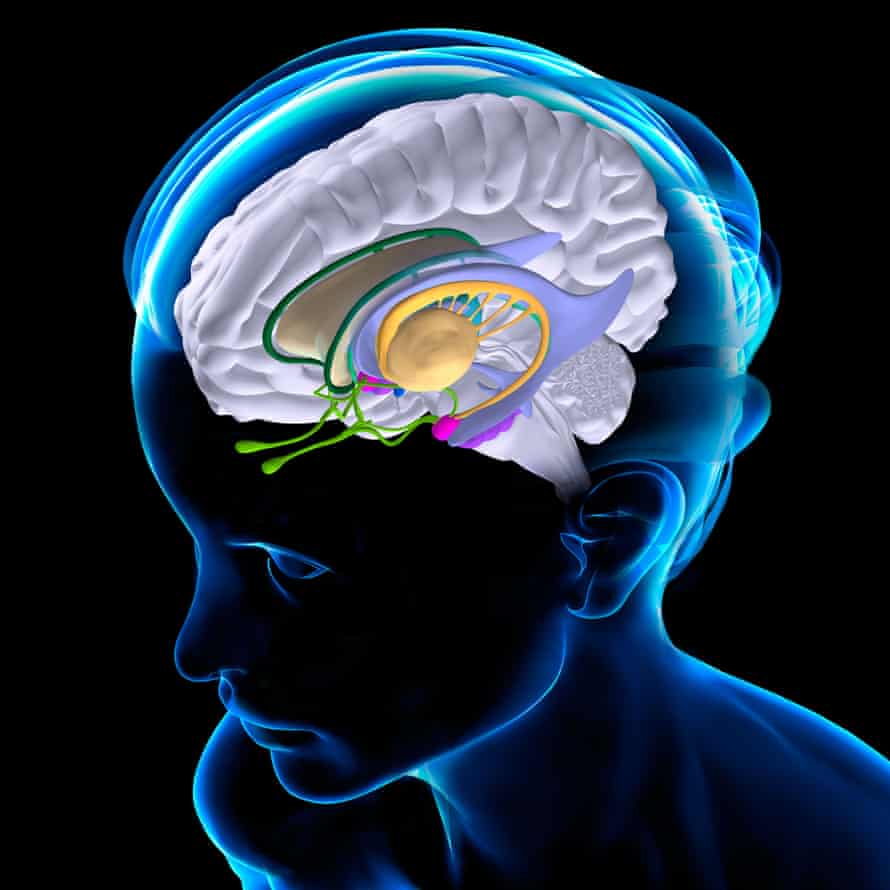
And so there are the metabolic costs that I wrote nigh before. Asking the brain to shift attention from one activeness to some other causes the prefrontal cortex and striatum to burn upwards oxygenated glucose, the same fuel they need to stay on task. And the kind of rapid, continual shifting we practise with multitasking causes the brain to burn through fuel so quickly that we feel wearied and disoriented afterwards even a brusk time. We've literally depleted the nutrients in our brain. This leads to compromises in both cognitive and physical operation. Amongst other things, repeated job switching leads to anxiety, which raises levels of the stress hormone cortisol in the brain, which in turn tin pb to aggressive and impulsive behaviour. By dissimilarity, staying on task is controlled past the anterior cingulate and the striatum, and once we engage the central executive manner, staying in that land uses less energy than multitasking and really reduces the encephalon's need for glucose.
To brand matters worse, lots of multitasking requires decision-making: Do I answer this text message or ignore it? How do I respond to this? How exercise I file this electronic mail? Do I go along what I'm working on at present or take a suspension? Information technology turns out that decision-making is also very hard on your neural resources and that lilliputian decisions announced to take up as much energy as big ones. One of the kickoff things we lose is impulse control. This rapidly spirals into a depleted country in which, afterward making lots of insignificant decisions, we tin terminate upwards making truly bad decisions about something important. Why would anyone want to add to their daily weight of data processing by trying to multitask?
In discussing information overload with Fortune 500 leaders, summit scientists, writers, students, and pocket-sized business owners, e-mail comes upwardly again and once more equally a trouble. It'southward not a philosophical objection to email itself, it'southward the mind-numbing number of emails that come in. When the x-year-onetime son of my neuroscience colleague Jeff Mogil (head of the Pain Genetics lab at McGill Academy) was asked what his begetter does for a living, he responded, "He answers emails." Jeff admitted subsequently some thought that information technology'southward not and then far from the truth. Workers in authorities, the arts, and industry report that the sheer volume of e-mail they receive is overwhelming, taking a huge bite out of their solar day. We feel obliged to answer our emails, only it seems incommunicable to exercise so and go anything else done.
Before email, if you lot wanted to write to someone, y'all had to invest some effort in information technology. Y'all'd sit down downwardly with pen and paper, or at a typewriter, and carefully compose a bulletin. There wasn't annihilation near the medium that lent itself to dashing off quick notes without giving them much thought, partly because of the ritual involved, and the fourth dimension it took to write a note, find and address an envelope, add stamp, and accept the letter of the alphabet to a mailbox. Because the very act of writing a note or letter to someone took this many steps, and was spread out over time, we didn't go to the trouble unless we had something important to say. Because of email's immediacy, near of usa requite little thought to typing up any little thing that pops in our heads and striking the send button. And email doesn't cost anything.
Sure, there's the money you paid for your estimator and your internet connection, simply there is no incremental cost to sending one more email. Compare this with paper letters. Each one incurred the toll of the envelope and the postage stamp, and although this doesn't represent a lot of money, these were in limited supply – if y'all ran out of them, you'd accept to make a special trip to the jotter store and the post office to buy more, so y'all didn't employ them frivolously. The sheer ease of sending emails has led to a change in manners, a tendency to be less polite about what we ask of others. Many professionals tell a similar story. One said, "A big proportion of emails I receive are from people I barely know asking me to practise something for them that is outside what would normally be considered the scope of my work or my human relationship with them. Email somehow apparently makes information technology OK to ask for things they would never ask by phone, in person, or in snail postal service."
There are besides important differences between snail postal service and email on the receiving terminate. In the old days, the simply mail we got came once a day, which effectively created a cordoned-off section of your day to collect it from the mailbox and sort it. Most chiefly, considering it took a few days to arrive, there was no expectation that you would act on it immediately. If you were engaged in another activity, you'd simply let the post sit down in the box outside or on your desk until yous were set to deal with it. At present email arrives continuously, and most emails need some sort of action: Click on this link to see a video of a baby panda, or answer this query from a co-worker, or brand plans for tiffin with a friend, or delete this electronic mail equally spam. All this activity gives united states of america a sense that we're getting things done – and in some cases we are. But we are sacrificing efficiency and deep concentration when nosotros interrupt our priority activities with email.
Until recently, each of the many different modes of communication we used signalled its relevance, importance, and intent. If a loved 1 communicated with you lot via a poem or a vocal, fifty-fifty before the message was credible, you had a reason to presume something about the nature of the content and its emotional value. If that same loved one communicated instead via a summons, delivered past an officer of the court, you would have expected a different message before even reading the document. Similarly, phone calls were typically used to transact different business from that of telegrams or business letters. The medium was a clue to the message. All of that has changed with email, and this is one of its overlooked disadvantages – because it is used for everything. In the sometime days, you lot might sort all of your postal postal service into two piles, roughly corresponding to personal messages and bills. If you were a corporate managing director with a busy schedule, you might similarly sort your telephone messages for callbacks. But emails are used for all of life'south messages. We compulsively check our email in office because nosotros don't know whether the adjacent bulletin will be for leisure/amusement, an overdue nib, a "to do", a query… something y'all can do now, later on, something life-changing, something irrelevant.
This incertitude wreaks havoc with our rapid perceptual categorisation system, causes stress, and leads to decision overload. Every electronic mail requires a decision! Do I respond to it? If so, now or afterwards? How important is it? What will be the social, economical, or chore-related consequences if I don't answer, or if I don't reply right now?
At present of grade electronic mail is budgeted obsolescence as a communicative medium. Near people under the age of 30 retrieve of email as an outdated style of communication used just by "old people". In its place they text, and some still post to Facebook. They adhere documents, photos, videos, and links to their text messages and Facebook posts the way people over 30 do with e-mail. Many people under 20 at present see Facebook every bit a medium for the older generation.
For them, texting has become the primary mode of communication. Information technology offers privacy that you don't get with phone calls, and immediacy you don't get with email. Crisis hotlines have begun accepting calls from at-run a risk youth via texting and it allows them two big advantages: they tin deal with more than i person at a fourth dimension, and they tin pass the chat on to an expert, if needed, without interrupting the conversation.
Only texting suffers from most of the problems of email and and so some. Because it is limited in characters, it discourages thoughtful discussion or any level of particular. And the addictive problems are compounded by texting's hyperimmediacy. Emails take some time to work their way through the net and they require that you lot have the step of explicitly opening them. Text messages magically appear on the screen of your phone and demand immediate attention from you. Add to that the social expectation that an unanswered text feels insulting to the sender, and y'all've got a recipe for addiction: you lot receive a text, and that activates your novelty centres. You reply and feel rewarded for having completed a task (fifty-fifty though that task was entirely unknown to you 15 seconds earlier). Each of those delivers a shot of dopamine every bit your limbic system cries out "More! More! Give me more than!"
In a famous experiment, my McGill colleagues Peter Milner and James Olds, both neuroscientists, placed a small electrode in the brains of rats, in a pocket-size structure of the limbic system called the nucleus accumbens. This structure regulates dopamine production and is the region that "lights up" when gamblers win a bet, drug addicts take cocaine, or people have orgasms – Olds and Milner called it the pleasure centre. A lever in the cage allowed the rats to send a small electrical bespeak directly to their nucleus accumbens. Do you retrieve they liked information technology? Boy how they did! They liked it and then much that they did goose egg else. They forgot all most eating and sleeping. Long after they were hungry, they ignored tasty food if they had a chance to press that trivial chrome bar; they even ignored the opportunity for sex. The rats just pressed the lever over and once more, until they died of starvation and exhaustion. Does that remind you of anything? A 30-twelvemonth-one-time human died in Guangzhou (China) after playing video games continuously for three days. Another man died in Daegu (Korea) subsequently playing video games almost continuously for 50 hours, stopped only by his going into cardiac abort.
Each time we dispatch an e-mail in one way or another, nosotros feel a sense of accomplishment, and our encephalon gets a dollop of reward hormones telling u.s. we achieved something. Each time we check a Twitter feed or Facebook update, we encounter something novel and feel more than connected socially (in a kind of weird, impersonal cyber fashion) and go another dollop of reward hormones. But call up, it is the impaired, novelty-seeking portion of the brain driving the limbic organisation that induces this feeling of pleasure, non the planning, scheduling, higher-level thought centres in the prefrontal cortex. Brand no mistake: email-, Facebook- and Twitter-checking establish a neural habit.
© Daniel J. Levitin. Extracted from The Organized Mind: Thinking Directly in the Age of Information Overload, published past Viking (£xx). Click here to purchase information technology for £16.
Source: https://www.theguardian.com/science/2015/jan/18/modern-world-bad-for-brain-daniel-j-levitin-organized-mind-information-overload
0 Response to "I Literally Felt My Iq Drop 10 Pounts Reading That Article"
Post a Comment